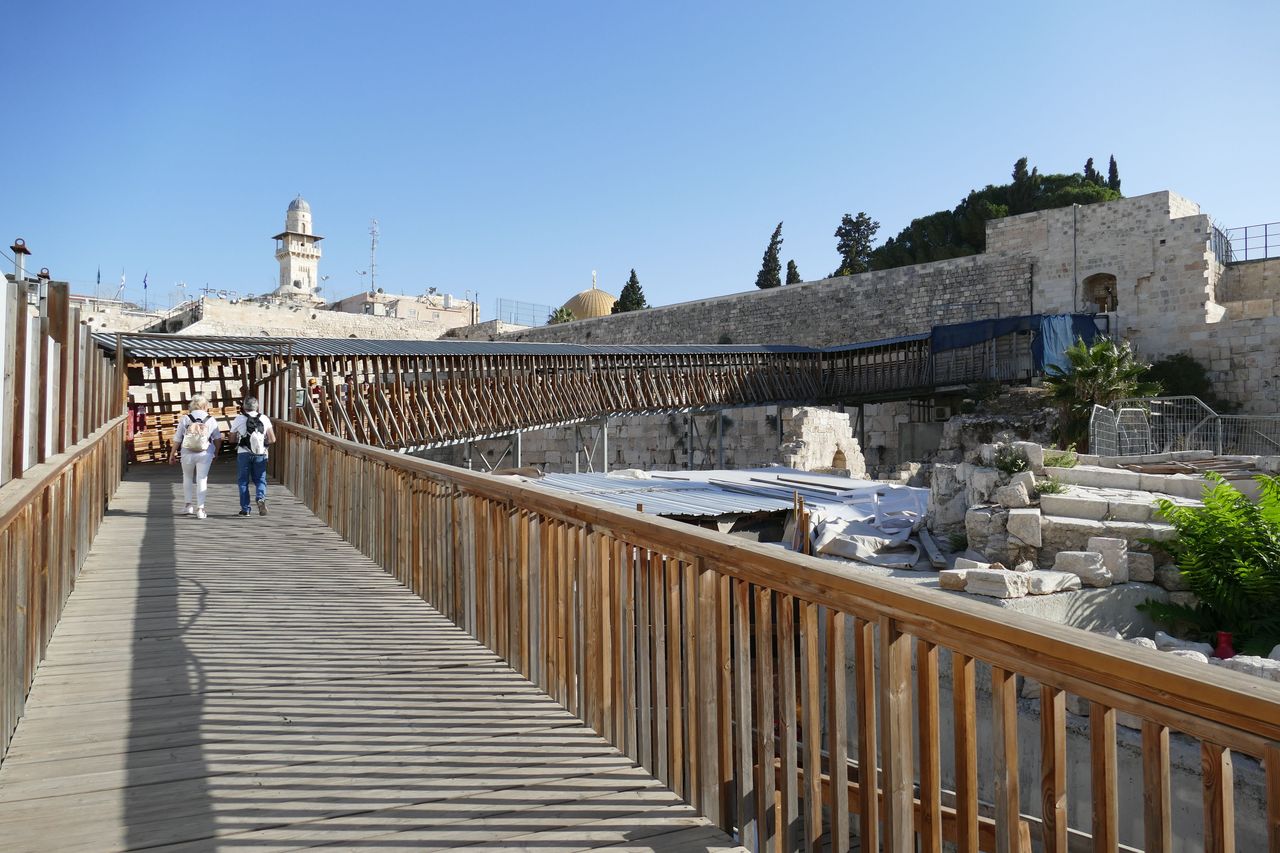
Israeli Knesset member Amit Halevi led groups of settlers into the Al-Aqsa Mosque compound in occupied East Jerusalem on Sunday, the second day of the Jewish holiday of Sukkot, according to the Palestinian Jerusalem Governorate, which said the rituals performed there were part of attempts to change the site's historical and legal status quo.
The official Palestinian news agency WAFA, citing the governorate, reported that the settlers entered in successive groups through the Mughrabi (Moroccan) Gate under Israeli police protection. In WAFA's latest update, the governorate put the number who had entered since the morning at 1,143, up from 260 cited in earlier reports that morning, including one by Jordan's Roya News.
According to the governorate, the settlers performed Talmudic prayers and rituals near the Qattanin Gate, sang, formed dance circles, carried out prostrations and lay face down on the ground in groups. They also brought plant offerings into the courtyards. WAFA said platforms affiliated with Temple groups stated that Israeli police did not prevent the offerings from being brought in.
Rabbis Chant in the Courtyards
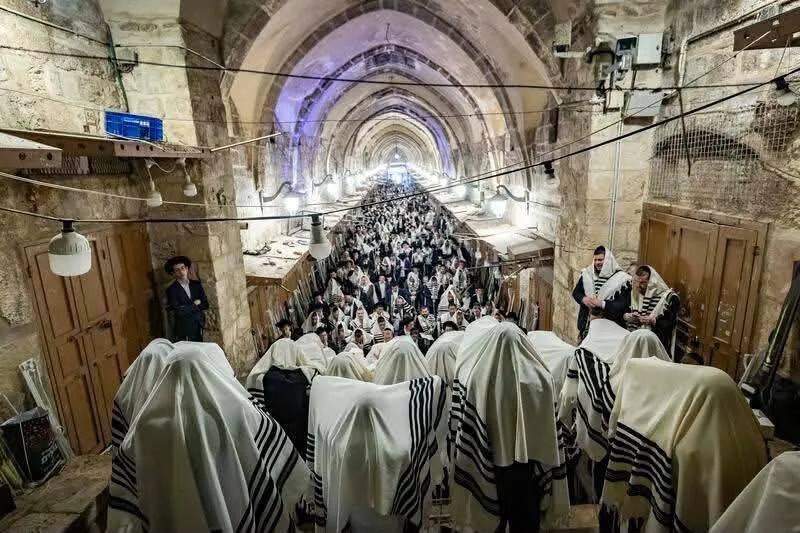
Later in the day, a group of rabbis from an association of North African rabbis entered the compound with dozens of settlers and chanted Talmudic hymns in its courtyards, the governorate said. WAFA's Arabic service reported that video footage showed the rabbis wearing traditional North African clothing, tallit prayer shawls and red fezzes as they walked along the eastern paths and colonnades of the compound, chanting loudly.
In WAFA's English report, the governorate said the practices "reflect an ongoing escalation in the imposition of Talmudic rituals inside Al-Aqsa Mosque and attempts to alter its established historical and legal status quo."
What the Status Quo Allows
Under the status quo arrangement, non-Muslims may visit the compound but may not pray there. Reuters has described it as an unwritten pact that preserves a rule effectively in place since 1187: "Non-Muslims can visit the compound but only Muslims can worship there." The site, known to Jews as the Temple Mount, is Judaism's most sacred and Islam's third holiest after Mecca and Medina.
Al Jazeera, in a 2023 explainer, wrote that under the arrangement Israel adopted in 1967, the Jordanian-appointed Islamic Waqf manages day-to-day affairs and only Muslims are permitted to pray, while Israeli police control access and security. The same explainer cited Eran Tzidkiyahu of the Hebrew University of Jerusalem as saying Jews have tacitly been allowed to pray in the compound since 2017.
Sunday's visits come amid heightened activity during the Jewish holiday season. The Palestinian Information Center (PalInfo), citing the Jerusalem Governorate, reported that 1,678 settlers entered Al-Aqsa on September 20 and 21 around Yom Kippur, the highest number recorded for that occasion, compared with 659 in 2021, 1,019 in 2022, 1,159 in 2023 and 1,015 in 2025.
Jerusalem affairs researcher Ziad Ibhais, in remarks carried by PalInfo before the holiday began, said Sukkot has become a major period for intensified entries into the compound. According to his figures, around 5,980 settlers entered over five days of the holiday in 2024 and 7,119 in 2025. He said Temple groups use the festival to push for plant offerings and related rituals inside the site.
Roya News reported that Israeli authorities also imposed a full closure on the West Bank and shut crossings from Sunday until the following Saturday, citing Sukkot. The holiday runs until October 2, according to a Jerusalem Governorate schedule cited by PalInfo.
The figures and descriptions in this report come from Palestinian sources and could not be independently verified.





Comments
0